
For many Midwest property owners, the choice between a steel building and a pole barn comes down to more than price. You may be planning a garage, workshop, storage building, RV cover, equipment shelter, or hobby space, and you want something that can handle local weather, fit your property, and hold up over time.
Both options can work well in the right situation. Pole barns, also called post-frame buildings, have been common across rural areas for decades. Steel buildings are also a strong choice for property owners who want a low-maintenance structure with flexible layouts and a clean, finished look.
If you are comparing options in Illinois, Iowa, Indiana, Wisconsin, Minnesota, Michigan, or Missouri, this guide will help you understand the practical differences. For Midwest property owners who want a clear building process from start to finish, United Metal Buildings offers custom metal building manufacturing and installation from its base in Rock Falls, IL.
What Is a Pole Barn?
A pole barn is a post-frame structure. In traditional post-frame construction, the building is supported by large wood posts or laminated wood columns, often embedded in the ground or attached to a foundation system.
The National Frame Building Association notes that traditional post-frame foundations use soil-embedded wood posts or laminated columns, while other designs may use different foundation options.
Pole barns are often used for agricultural storage, livestock buildings, hay storage, basic garages, and equipment sheds. They can be affordable upfront because they typically use fewer foundation materials than some other construction methods.
For some property owners, that simplicity is the main appeal. A pole barn can be a good fit when the goal is basic covered storage, and the budget is the top concern.

What Is a Steel Building?
A steel building uses metal framing and metal panels to create the structure. Depending on the design, it may be used as a garage, workshop, RV port, agricultural storage building, commercial storage space, or multi-use structure.
The Metal Building Manufacturers Association explains that metal building components are fabricated before reaching the job site and are typically bolted together during construction.
This can help create a more predictable installation process when the building is properly planned, manufactured, and installed.
Steel buildings are popular among property owners who want a structure with wide interior space, strong exterior materials, and less concern about wood rot, pest damage, and frequent exterior upkeep.
Why Midwest Weather Matters
The Midwest has a wide range of weather conditions. Property owners may deal with heavy snow, high winds, freeze-thaw cycles, spring storms, humidity, and long winters. That matters when choosing a building style.
Building codes account for loads such as snow, wind, rain, and other structural forces. The International Building Code states that structural components must be designed to resist loads likely to be encountered by the building.
HUD guidance also notes that snow loads are often defined by local building departments, which is why location-specific planning matters.
That does not mean one building type is automatically right for every property. It does mean your structure should be selected and built with your county, site conditions, and intended use in mind.
Steel Building vs. Pole Barn: Key Differences
1. Long-Term Maintenance
A major difference is how each structure ages.
Pole barns use wood framing as a main structural component. Treated wood can perform well when designed and installed correctly, but wood still needs attention over time.
Moisture, soil contact, insects, and exterior wear can become concerns, especially in areas with wet ground or freeze-thaw cycles.
Steel buildings shift the maintenance focus. Instead of watching for rot or insect damage in wood posts, owners usually focus on keeping panels clean, checking fasteners, maintaining doors, and addressing scratches or exposed metal when needed.
For property owners who want a garage, shop, or RV cover with less routine structural upkeep, steel often has the advantage.
2. Interior Space and Layout
Pole barns can provide open space, but the layout depends on the post-frame design.
Larger buildings may still need planned post spacing and framing support.
Steel buildings are often chosen because they can create wide, usable interior space.
This is helpful for property owners who need room for vehicles, boats, RVs, trailers, tractors, tools, or workbenches.
For example, someone building metal garages in Illinois may want more than a basic car shelter. They may need a space for two vehicles, storage shelves, lawn equipment, and a small work area. Steel makes it easier to plan around that use from the beginning.
3. Appearance and Curb Appeal
Pole barns can look traditional, especially on farms or rural properties. That can be a positive if the structure matches the surrounding land.
Steel buildings can be designed with a clean, modern, or practical look depending on color, roof style, trim, doors, windows, and size. For residential properties, that flexibility matters. A building used for a workshop or garage should not feel like an afterthought next to the home.
Steel can be a strong choice for property owners who want the structure to look finished while still being practical.
4. Weather Resistance
Both steel buildings and pole barns can be designed to handle Midwest weather, but the details matter.
Wind-resistant construction depends on how forces move through the building and into the foundation. The Department of Energy’s Building America Solution Center explains that a continuous load path uses positive connections from the roof to the foundation to help resist wind uplift and lateral forces.
This is why buyers should look beyond the surface. A building is not just panels, posts, or framing. It is a full system of connections, anchoring, roof design, wall design, and installation quality.
For steel buildings, working with experienced Metal Building Manufacturers helps ensure the structure is planned with local conditions in mind.
5. Cost and Value
Pole barns may have a lower starting price in some situations. If you need a basic agricultural shelter and do not need many custom features, that can be appealing.
Steel buildings may cost more upfront depending on size, foundation needs, customization, and installation.
However, the long-term value can be stronger for owners who want reduced maintenance, a finished appearance, and flexible use.
It helps to think in terms of total cost, not just the first quote. Consider:
How often will the building need maintenance?
Will the structure support future use?
Does it improve daily convenience?
Will it protect expensive vehicles, tools, or equipment?
Does it match the property well?
For a realistic estimate, property owners can review Metal Building Prices based on their building size, location, and intended use.
When a Pole Barn May Make Sense
A pole barn may be the better choice when you need a simple, budget-focused structure for agricultural storage or basic shelter. It can also be a practical option on rural land where a traditional barn look fits the property.
A pole barn may work well if:
You want basic storage
The building will be used mainly for a farm or equipment shelter
You are comfortable with wood-frame maintenance
Your design needs are simple
The lowest upfront cost is the main priority
For the right project, a pole barn can still be a reasonable solution.

When a Steel Building May Be the Better Choice
A steel building is often a better fit when the owner wants a cleaner finish, flexible interior space, and long-term durability. This is especially true for garages, RV covers, shops, and storage structures that need to look good and perform well for years.
A steel building may be the better choice if:
You want a garage or workshop with open interior space
You need reliable coverage for an RV, boat, trailer, or vehicle
You prefer lower maintenance than wood framing
You want a finished look that fits your property
You plan to use the building for more than basic storage
You want clear communication from design through installation
For RV owners, Custom RV Ports can help protect a large investment from sun, snow, rain, and seasonal exposure. For homeowners and small business owners, Steel Workshops can provide practical space for tools, hobbies, storage, and repairs.
Midwest Property Examples
A homeowner in Illinois may need a detached garage that handles winter weather and gives them space for vehicles and lawn equipment. A steel garage can offer a clean exterior and practical storage without relying on wood posts in the ground.
A property owner in Wisconsin or Minnesota may care most about roof design and snow load planning. In that case, the building should be matched to local requirements, not chosen from a generic template.
A landowner in Missouri or Iowa may need a structure for tractors, trailers, and seasonal equipment. A pole barn may work for basic farm storage, while a steel building may be better if the owner wants a more finished, lower-maintenance structure.
A business owner in Indiana or Michigan may need a shop space with room for tools, inventory, or vehicles. Steel can be useful because the space can be designed around how the building will actually be used.
Questions to Ask Before Choosing
Before deciding between a steel building and a pole barn, ask a few practical questions.
What will the building store? A garage for vehicles has different needs than a hay barn, RV cover, or workshop.
How long do you plan to use it? A short-term storage structure may not need the same investment as a long-term garage or shop.
What does your property require? Soil, drainage, driveway access, local codes, and snow or wind loads can all affect the final design.
How much maintenance are you willing to handle? Wood and steel age differently, so think beyond the first year.
Do you want the building to add everyday convenience? A well-planned steel building can make it easier to store, work, park, and organize.
So, Which Is Better?
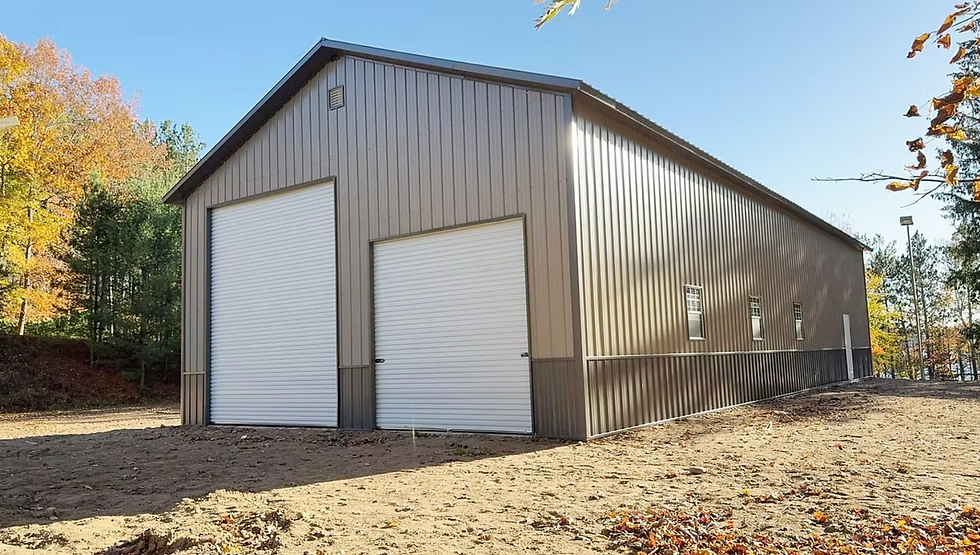
For many Midwest property owners, a steel building is the better long-term choice for garages, workshops, RV ports, and finished storage buildings.
It offers strong design flexibility, practical weather resistance, and lower concern about wood-related maintenance.
A pole barn can still make sense for basic agricultural use or when the upfront price is the main factor. But if you are building something you plan to use often, protect valuable equipment with, or place near your home or business, steel is usually worth serious consideration.
The best choice depends on your property, budget, and goals. That is why it helps to work with a team that understands Midwest conditions and can walk you through the process clearly.
Conclusion: Build for How You Actually Use Your Property
A building should fit your land, your equipment, your vehicles, and your plans for the future. Whether you need a garage, shop, RV port, or custom structure, choosing the right building type now can save time, maintenance, and frustration later.
United Metal Buildings manufactures and installs custom steel structures across the Midwest, including Illinois, Iowa, Indiana, Wisconsin, Minnesota, Michigan, and Missouri.
To compare options, view recent projects, or get a quote through unitedmetalbuildings.us.


Comments