
Not every metal building project needs to be installed on a full concrete slab.
Here at United Metal Buildings, we manufacture and install every building that gets ordered. That means our internal sales team and authorized dealers help customers look at the ground they have, the building they want, and the anchor option that makes the most sense for the job.
For some customers, that may mean a lower-cost alternative to a full slab. The key is making sure the anchor type matches the site and the amount of anchors used matches the building size.
Available Anchor Types for the Ground You’ve Got
Not every install calls for the same anchor. Asphalt, open soil, gravel, and basic ground conditions all bring different needs to the table. Here’s a look at the three ground anchor options we offer, where each one fits best, and what comes with each choice.
Asphalt and Rock Anchor

Benefits:
Works with existing asphalt surfaces
Can lower upfront foundation cost
Strong option for paved install areas
Qualifies for our 20-Year / 120 MPH Wind Warranty
Things to Know:
Only works where asphalt conditions are suitable
Not built for dirt or open ground installs
Surface condition still matters
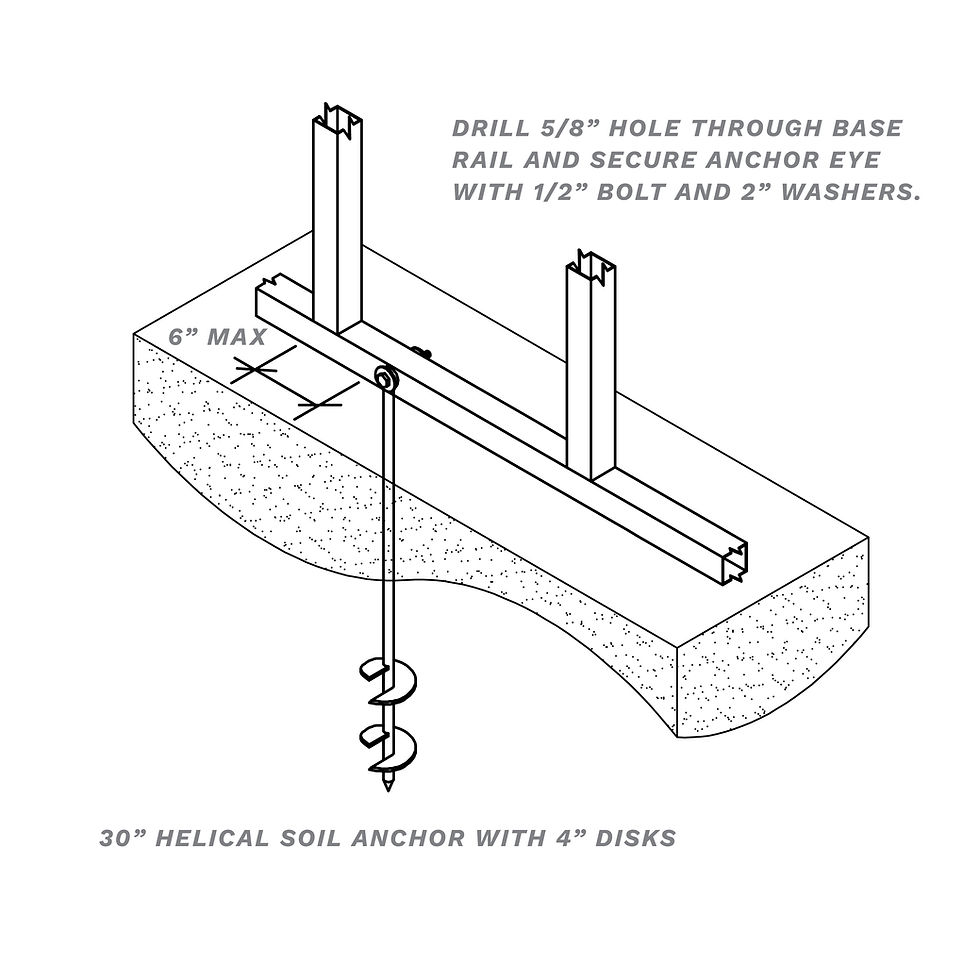
Soil & Gravel Anchor (Helical Anchor)
Benefits:
Strong option for carport installation
Can be a lower-cost alternative to a full slab
Built for dirt and gravel conditions
Qualifies for our 20-Year / 120 MPH Wind Warranty
Things to Know:
Soil conditions affect how and where it works best
Not every site is ideal for ground anchors
Rebar Anchor

Benefits:
Lower upfront cost
Practical for certain basic installs
Can be a fit for lighter-duty projects
Things to Know:
Soil conditions affect how and where it works best
Not every site is ideal for ground anchors
The Right Anchor Setup Protects More Than Your Building
If you want our 20-Year / 120 MPH Wind Warranty, the anchor setup has to be right from the start.
That means the building needs the correct anchor type and the proper number of anchors for the surface it is being installed on. Miss that, and the warranty coverage is not there the way you expect it to be.
Asphalt anchors can qualify when install requirements are met
Ground anchors can qualify when install requirements are met
Rebar anchors do not qualify for wind warranty coverage
If your building ever experiences wind damage, you can submit a warranty repair claim through our online form.
Looking for a Lower-Cost Option Than a Full Slab?
A full concrete slab still makes sense for a lot of projects. But not every customer wants to start there.
Sometimes the property already has asphalt in place that connects to a driveway. Sometimes the building is going on open ground for heavy duty equipment use. Sometimes the goal is to get a solid structure installed now and keep costs tighter upfront.
That is why we offer multiple anchor options based on the site and the structure.
Explore Install Options for Your Building Project with UMB
If you are planning a metal building and want to explore options besides a full concrete slab, call us at 309-278-8000, fill out our online contact form, or utilize our online chat during normal business normals.
We’ll help you look at your site conditions, type of building you want, and which anchor option makes the most sense.


Comments